

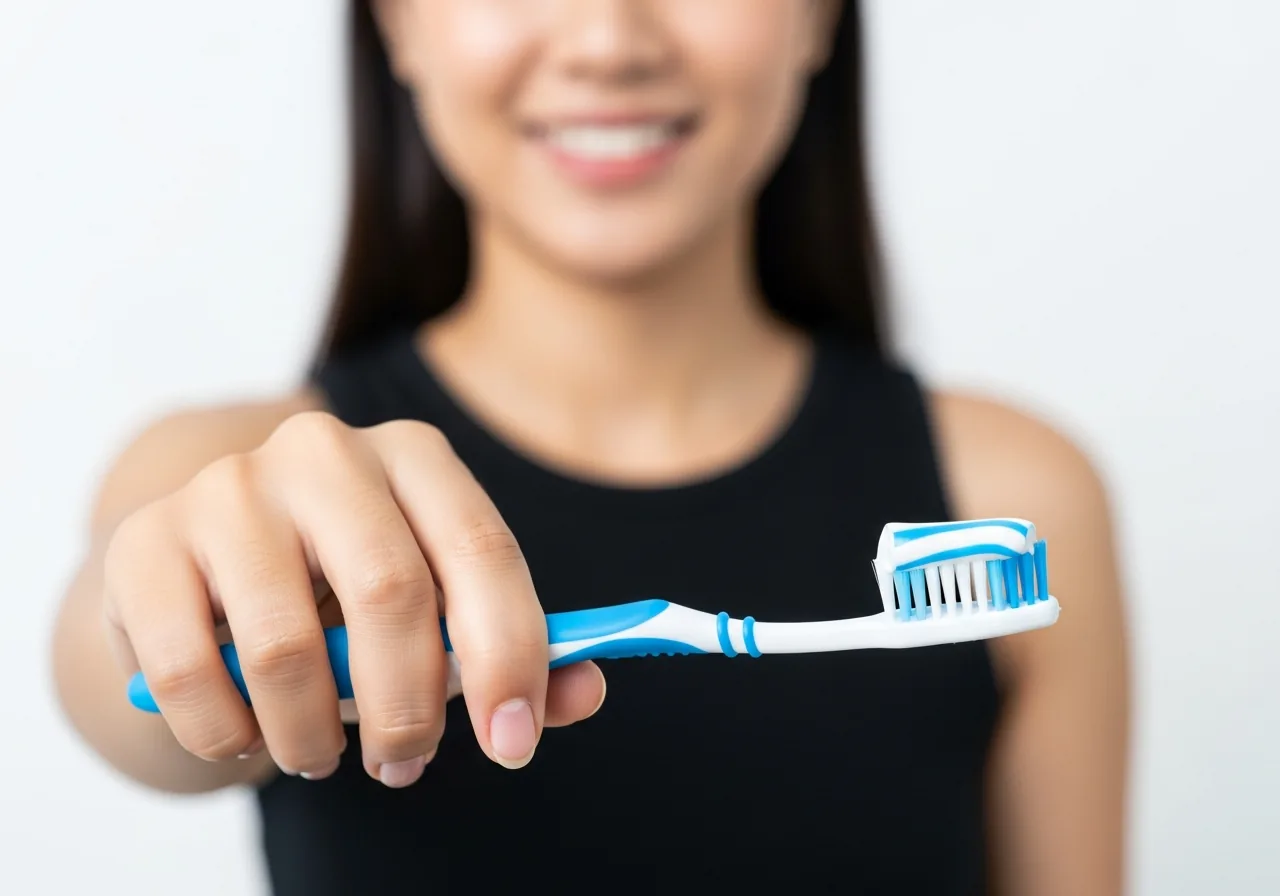
Bleeding gums
Why bleeding gums occur more often during pregnancy and how professional teeth cleaning can help.
Learn more
Dental health and pregnancy are closely connected - we advise you on this with sensitivity and expertise.
Pregnancy and dental health influence each other in many ways. Chronic inflammation, for example of the gums, can affect the entire body.
Bacterial infections in the mouth are associated with an increased risk of pregnancy complications. Especially during this time, careful oral hygiene and regular dental check-ups are particularly worthwhile.
During pregnancy, hormonal changes can make the gums more sensitive and prone to bleeding more quickly. We're happy to advise you on how adapted oral hygiene and professional teeth cleaning can help prevent this.
Feel free to come to us - we take plenty of time for questions about your dental health during this special period.
Two topics that are especially important for expecting parents.
Why bleeding gums occur more often during pregnancy and how professional teeth cleaning can help.
Learn more
In rare cases, chronic inflammation in the jaw area may play a role - we inform you about this with sensitivity.
Learn more
During pregnancy, the hormone balance changes fundamentally, which affects the entire body - including the oral cavity. These changes can promote existing inflammation of the gums and periodontium, without causing it themselves.
As a result, bacterial deposits from tartar or plaque can trigger symptoms more quickly during this time, often noticeable through increased bleeding gums. We therefore recommend professional teeth cleaning for expectant mothers, ideally before the last trimester of pregnancy.
Dental research is investigating whether chronic sites of inflammation in the body - for example in the jawbone or gums - can affect general health. Such sites often remain unnoticed for a long time and are therefore rarely recognised as a possible cause.
If you would like a dental examination for hidden inflammation sites in the case of unexplained infertility, please feel free to speak to us. This includes, among other things, an X-ray of the jawbone beyond the routine check-up. It does not replace medical diagnostics, but can meaningfully complement them.