

News from our practice
We regularly report here on news from our practice - from new treatment approaches to practical tips for your dental health.
Feel free to check back from time to time, or ask us directly at your next appointment.
Das Wichtigste auf einen Blick
- Auf dieser Seite informiert die Praxis regelmäßig über aktuelle Themen rund um die Zahngesundheit.
- Dazu zählen neue Behandlungsansätze ebenso wie praktische Tipps für den Alltag.
- Rückfragen zu einem Thema können auch direkt beim nächsten Praxistermin gestellt werden.
Frequently Asked Questions
News
A dental injury can range from a harmless crack in the enamel to a tooth knocked out completely, sometimes even with a fractured jaw. Even so, the tooth can often be saved if you react quickly and correctly. These ten rules show what matters most for the injured person and first responders:
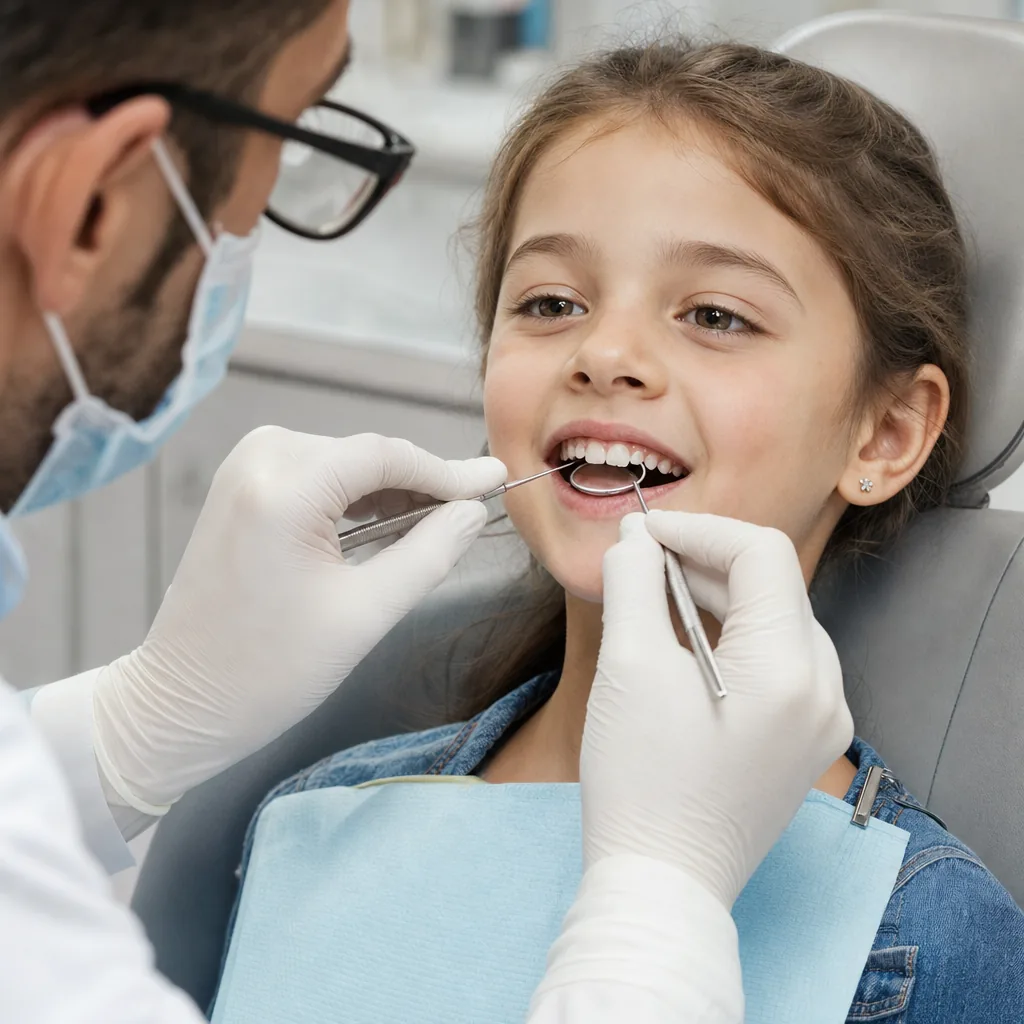
Emergency roadmap: the first minutes matter most
1. First, stay calm and reassure the injured child. Carefully lift the lip to take a first look inside the mouth.
2. Since the injury can bleed heavily, press a cloth handkerchief or sterile dressing material onto the bleeding site and cool from the outside.
3. If teeth are loose, leave them undisturbed - do not wiggle or test them.
4. Look for the knocked-out tooth or tooth fragments. Only ever hold the tooth by the crown, never by the root, and refrain from cleaning it, even if it appears visibly dirty.
5. The tooth must be kept moist - ideally in a tooth rescue box from a pharmacy. Some schools, kindergartens, sports clubs and swimming pools also keep such boxes ready.
6. If the tooth reaches the special nutrient medium within 20 minutes, the sensitive cells of the periodontal ligament (root membrane) remain viable for up to 48 hours.
7. If no rescue box is available, cold UHT milk can serve as a substitute; cling film, saliva in a container or isotonic saline solution are also possible - however, this shortens the possible storage time and reduces the chances of healing.
8. Never place the tooth in water, a damp cloth or the mouth - and never transport it dry.
9. Visit a dental clinic or dental practice without delay.
10. The dentist thoroughly examines the affected teeth, initiates the appropriate treatment and records all findings in the patient file - relevant, for example, for insurance claims in the case of school or work accidents, as well as for later treatment in the event of long-term consequences.
For initial emergency care there is a nationwide dental emergency hotline in Germany: (1805) 012800 (call charges apply). Additional information on tooth rescue is available at www.zahnrettungskonzept.info, and zahnunfall24.de shows where further tooth rescue boxes can be found outside of pharmacies.
Dental injuries in numbers
• About every second child suffers at least one dental injury by the age of 16 [1].
• The most affected are baby teeth in children of kindergarten age as well as the teeth of nine- to 16-year-olds [1].
• Boys are affected three times as often as girls [2].
• In 70 percent of cases, the upper central incisors are affected [3].
• 30 percent of injuries affect baby teeth, 20 percent permanent teeth [2].
• About two-thirds of all accidents happen at home, on the playground or during sports [1].
• A mouthguard reduces the risk of injury from sports-related dental accidents by 60 percent [4].
• The chances of saving the tooth are highest when it reaches a tooth rescue box within five minutes [5].
• In economic terms, this results in around five million euros of follow-up costs per million inhabitants each year in Central Europe [5].
• If a front tooth is lost at a young age, the individual follow-up costs over a lifetime amount to around 10,000 to 20,000 euros [5].
Sources:
1. Deutsche Gesellschaft für Mund-, Kiefer- und Gesichtschirurgie (German Association of Oral and Maxillofacial Surgery)
2. Bayerische Landeszahnärztekammer (Bavarian State Chamber of Dentists)
3. Bundeszahnärztekammer (German Dental Association)
4. Deutsche Gesellschaft für Zahn-, Mund- und Kieferheilkunde e.V. (German Society of Dentistry and Oral Medicine)
5. zahnunfall.de/Dr. Yango Pohl
Source: www.dzw.de